
CRE Interest Rates Utah: A Guide for Investors (2025)

Pen icon inside a white circle.

Written by

Cove Kralich
Calendar icon in a white circle.

Post Date

November 4, 2025
Speech bubble icon within a white circle.

Comments

No Comments

For commercial real estate investors in Utah, there is one financial indicator that matters above almost all others: the cost of capital. After a period of rising costs, the market is now signaling a significant shift—interest rates are falling.


This isn't just a minor headline; it's a powerful green light for savvy investors. When the cost of borrowing money goes down, the value of the assets it buys goes up.


But how does this really work? And how can you strategically position your portfolio to take advantage of this new environment?


As your partners in the Salt Lake County and Utah market, the APEX CRE team has built this in-depth guide to help you understand what falling commercial real estate interest rates in Utah mean for your bottom line.

The Core Relationship: How Interest Rates Affect CRE Values

This is the text area for this paragraph. Once you've added your content, you can customize its design by using different colors, fonts, font sizes and bullets. Just highlight the words you want to design and choose from the various options in the text editing bar.

4 Ways Falling Rates Directly Impact Utah Investors

This new market shift creates four distinct opportunities.


1. A Surge in Your Buying Power


This is the most direct impact. A lower interest rate means a lower monthly mortgage payment (debt service) for the exact same loan amount.


Let's look at a simple example: You're analyzing a $3,000,000 commercial loan with a 25-year amortization.

  • At 7.0% Interest: Your principal and interest payment is approximately $21,200/month.
  • At 5.5% Interest: Your payment drops to approximately $18,400/month.


That's a savings of $2,800 per month, or $33,600 per year—a massive boost to your Net Operating Income (NOI) and cash-on-cash return.


Alternatively, this new-found savings allows you to afford more property. That extra $2,800 in monthly capacity means you could potentially increase your loan amount by nearly $400,000, allowing you to be more competitive on that prime industrial property in West Valley City or multi-family complex in South Jordan.


2. The Golden Window for Refinancing


For investors who already hold property, a falling-rate environment is a time to celebrate. You now have a golden opportunity to restructure your debt and improve your portfolio's performance.


  • Rate-and-Term Refinance: You can refinance your existing loan to a new, lower rate, locking in savings for years to come. This directly increases your monthly cash flow and improves the stability of your asset.


  • Cash-Out Refinance: As property values in Utah have climbed, you have likely built significant equity. A cash-out refinance allows you to secure a new, larger loan at a favorable rate, pulling out your tax-free equity. This new capital can be used as a down payment on your next acquisition (see our current listings), fund value-add renovations, or build your cash reserves.


3. Fueling New Development


New construction is the lifeblood of Utah's economy, but it's also highly sensitive to interest rates.


Development projects, from ground-up industrial parks near the Inland Port to new multi-family housing in Lehi, rely on construction loans. Lower rates reduce the carrying costs during the build-out phase, making projects that were once on the bubble "pencils out" and become financially viable.


For investors, this means we can expect to see an increase in new, high-quality inventory coming to the market.


4. The Critical Impact on Cap Rates (This is Key)


This is the most important, and often misunderstood, concept. Falling interest rates lead to cap rate compression, which is the technical term for "rising property values."


Here’s how:


  1. What is a Cap Rate? A Capitalization Rate is the expected rate of return on a property based on its income. The formula is: NOI / Property Value = Cap Rate.
  2. The "Spread": Investors demand a "spread," or profit margin, between their cost of borrowing and the property's cap rate. For example, if you can get a loan at 5.5% (your cost), you'll want to buy a property with at least a 6.5% cap rate (your return).
  3. The Squeeze: When interest rates fall, investors are willing to accept a lower return because their cost of borrowing is also lower. They are now willing to pay more for the same income stream.


Example:


  • An office building in Murray has an NOI of $100,000.
  • In a high-rate market, investors demand a 7.0% cap rate. The value is **$1,428,000** ($100,000 / 0.07).
  • In this new, lower-rate market, investors are competing for deals and are now willing to accept a 6.0% cap rate. The value becomes **$1,667,000** ($100,000 / 0.06).


The building's income didn't change, but its value increased by nearly $240,000, purely because of the shift in the financial environment.


What's the Risk? A Balanced Perspective


While falling rates are overwhelmingly positive, a smart investor sees all angles.


  • Why Are Rates Falling? If rates are falling because the Federal Reserve is trying to stimulate a weak economy, that could signal potential trouble ahead, such as lower tenant demand or difficulty in raising rents.
  • Increased Competition: You're not the only one who sees this opportunity. Lower rates bring more buyers to the table, increasing competition for prime assets. This can drive prices up quickly, making it essential to act decisively.


This is why having an expert on your side is so critical. You need a team that can analyze the true health of an asset—tenant quality, lease terms, building condition—not just the financing.


APEX CRE's Strategy: How to Win in This Market


A change in the market demands a change in strategy. Here is our advice for Utah commercial real estate investors:


  1. Act with Urgency: This "golden window" for refinancing won't last forever. Contact your lender now to analyze your current loans and see if you can lock in a lower rate.
  2. Lock in Long-Term Debt: When you do buy or refi, aim for fixed-rate, long-term debt (7-10 years). This secures your low cost of capital and protects you from future market volatility.
  3. Be Ready to Move: With more buyers, the best deals will go fast. Have your financials in order and be prepared to move decisively when our team at APEX brings you an opportunity.
  4. Re-evaluate Your Portfolio: Is it time to use a 1031 Exchange to move from an older asset into a newer one with better financing? Or is it time to pull cash out for an expansion?


Conclusion: Build Your Future with Smart Financing


Falling commercial real estate interest rates in Utah are a powerful catalyst for growth. This is a time of opportunity for those who are prepared to act.


Whether you're looking to acquire your first property, expand your portfolio, or optimize the assets you already hold, the APEX CRE team is here to provide the market-leading expertise you need to build your future.


Contact the APEX CRE team today at (385)-217-4005 to analyze your portfolio and find your next opportunity.


External Resource Link (for further reading):


Share this article

Recent Posts

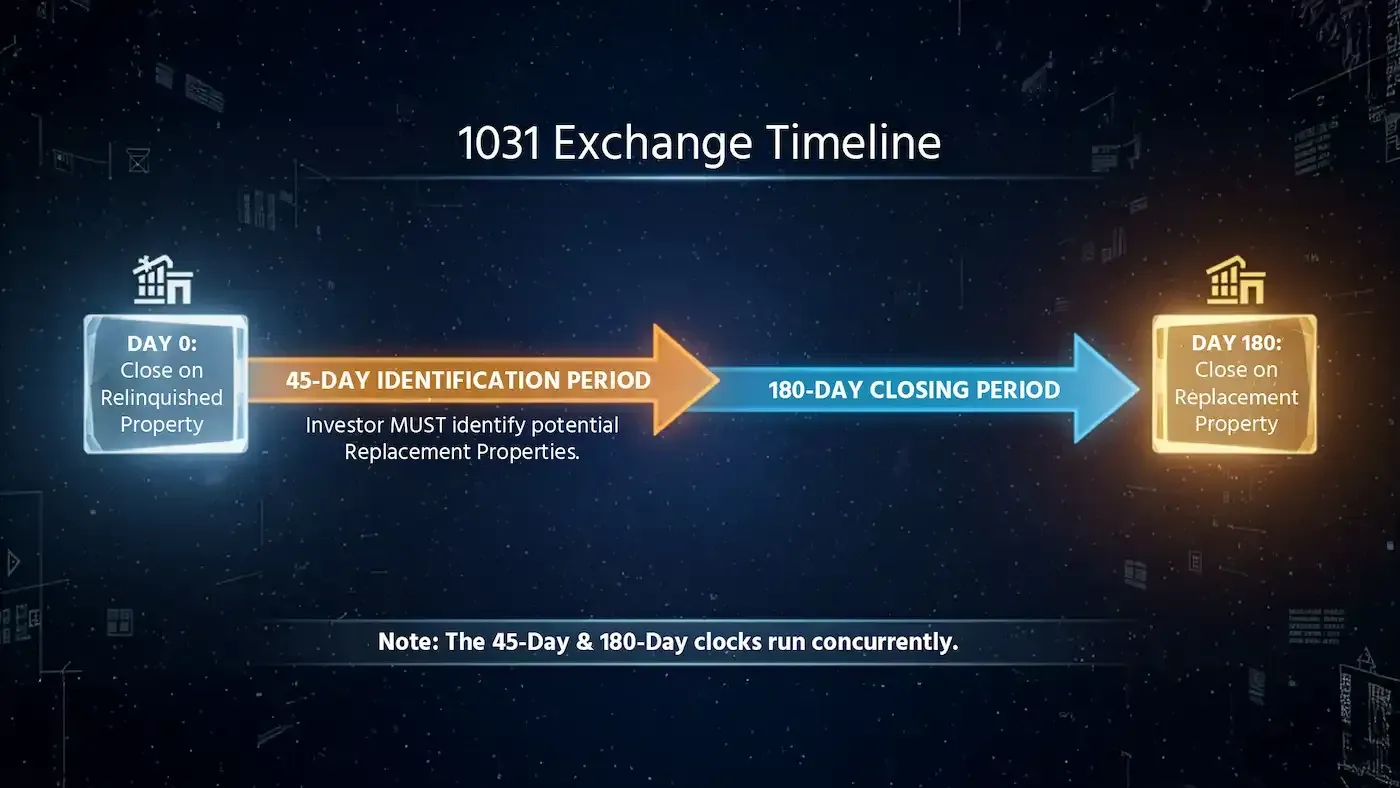
A diagram showing the 1031 exchange timeline, which includes the 45-day & 180-day periods.
By Cove Kralich November 4, 2025
Master the 1031 exchange in Utah. Our complete guide covers the 45/180-day rules, like-kind property, and pitfalls to defer capital gains.

Two people signing a contract on a clipboard, with small building models on the desk.
By Cove Kralich November 4, 2025
It's back! The 100% bonus depreciation rule for 2025 is a game-changer for CRE. Learn how to use cost segregation to maximize your tax deductions in Utah.